Neo Rauch
Neo Rauch
Neo Rauch
Neo Rauch
Neo Rauch
Neo Rauch
Neo RauchÉquilibre
|
|
Neo Rauch
Neo Rauch
Neo Rauch
Neo Rauch
Neo Rauch
Neo Rauch |
|
Le Musuem de Reede (ouvert en 2017), consacré aux arts graphiques, présente (après l’exposition très dense des œuvres de Jean Rustin), une exposition exceptionnelle, une rétrospective d’envergure consacrée à l’œuvre graphique de Neo Rauch (né à Leipzig en 1960). Artiste allemand peu connu en Belgique comme en France. Nous avions vu sa première exposition à la Fondation Beyeler (Bâle-Riehen), en 2006, où l’on montrait ses grandes toiles.
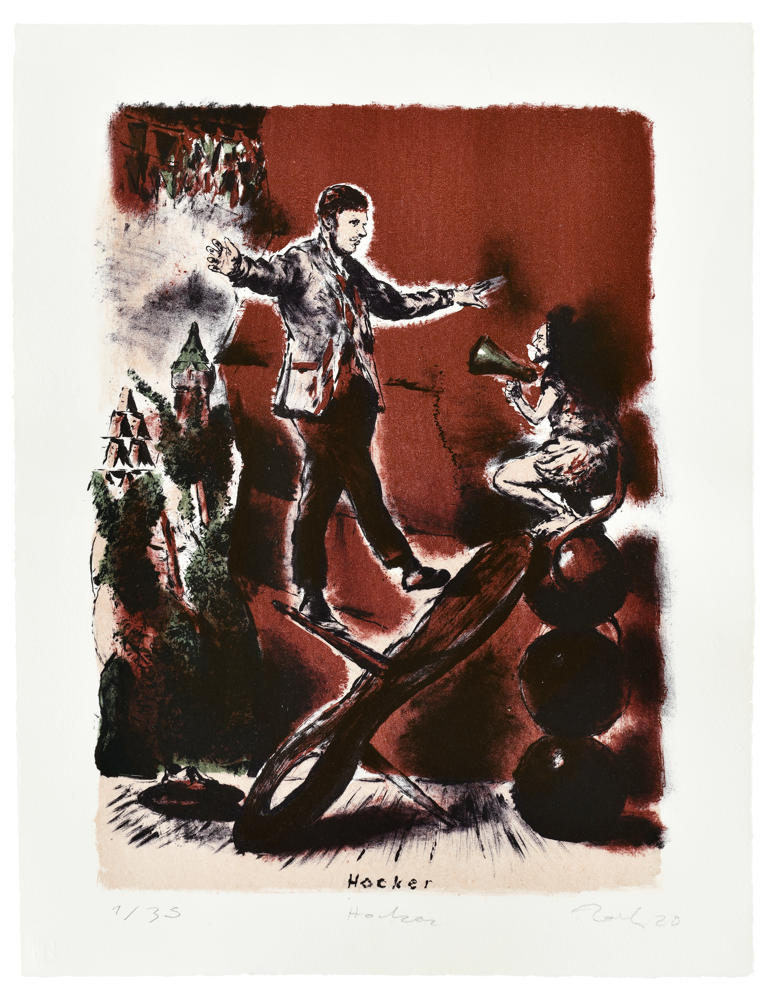
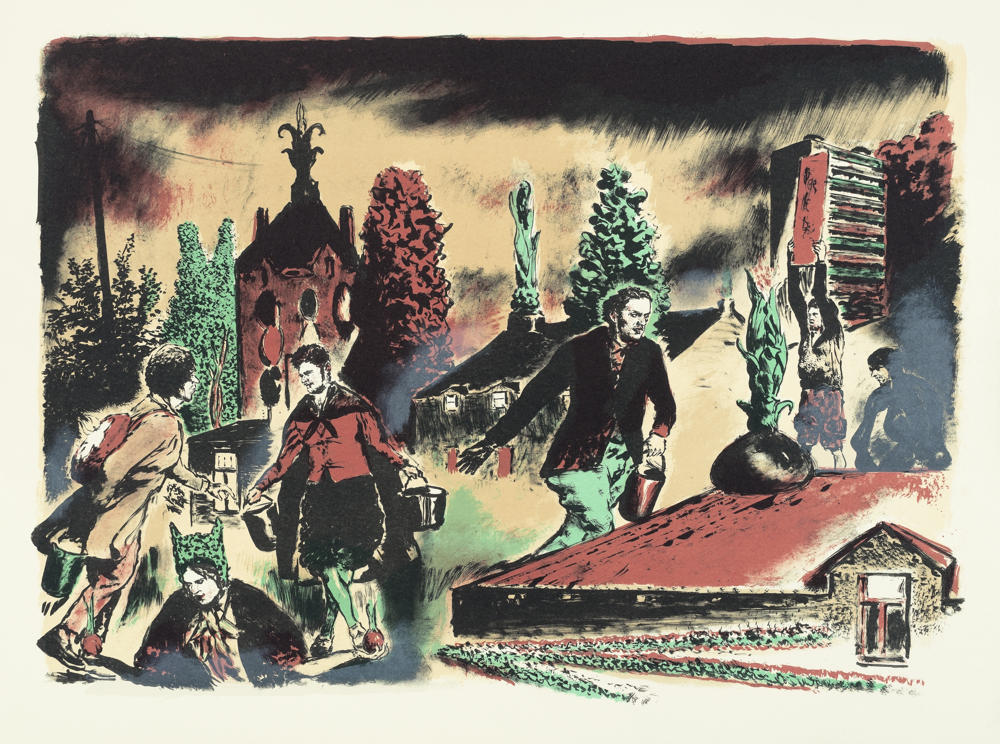
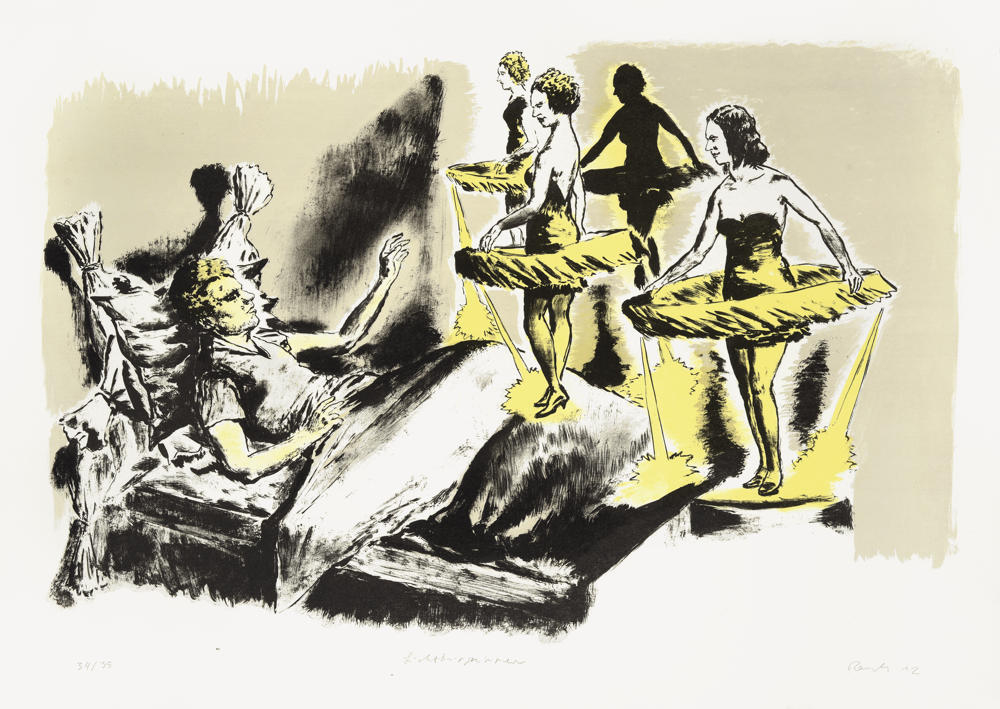
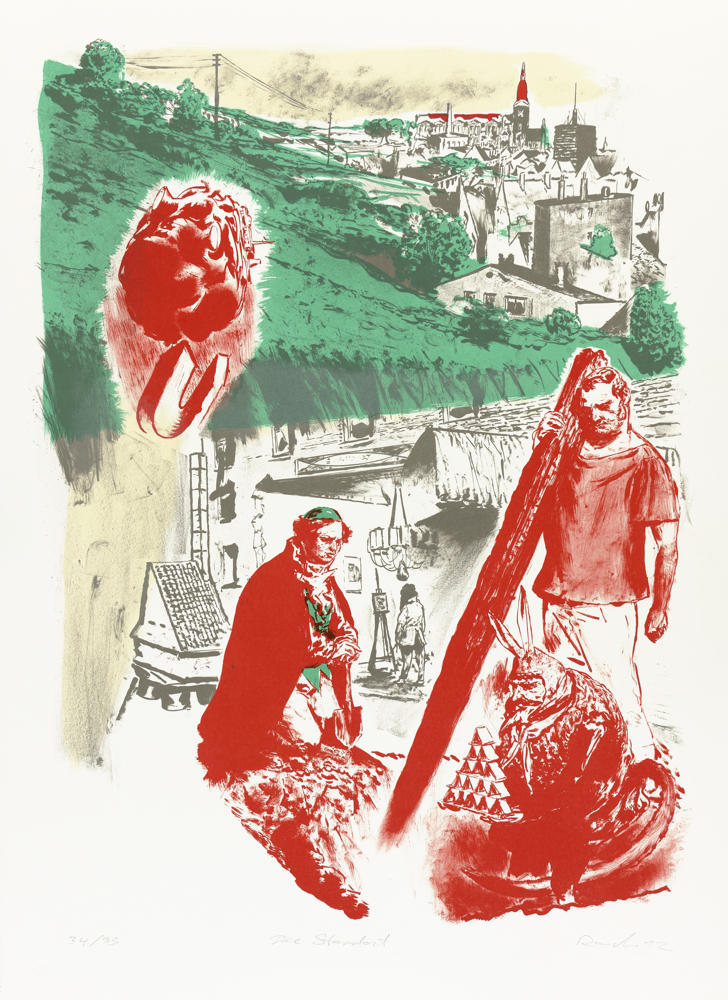
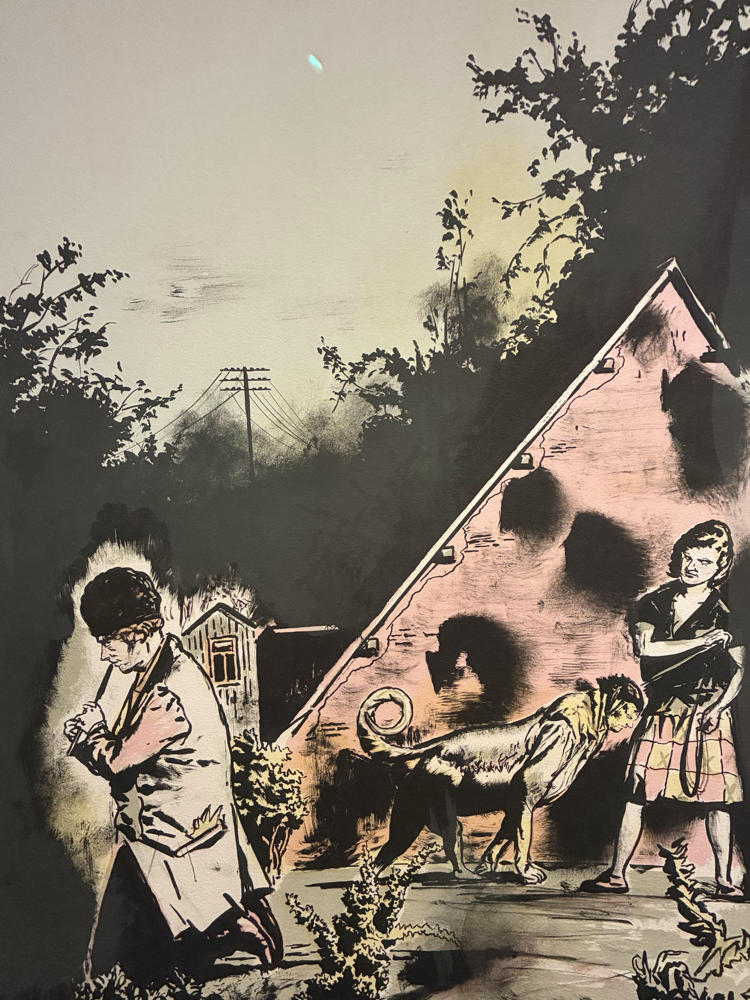
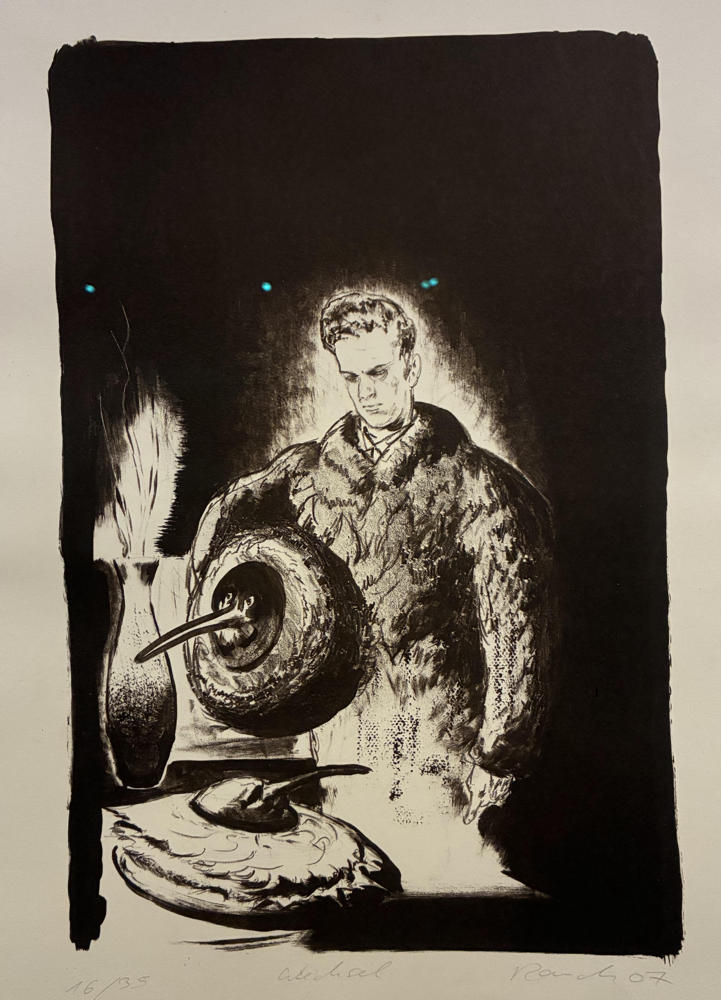
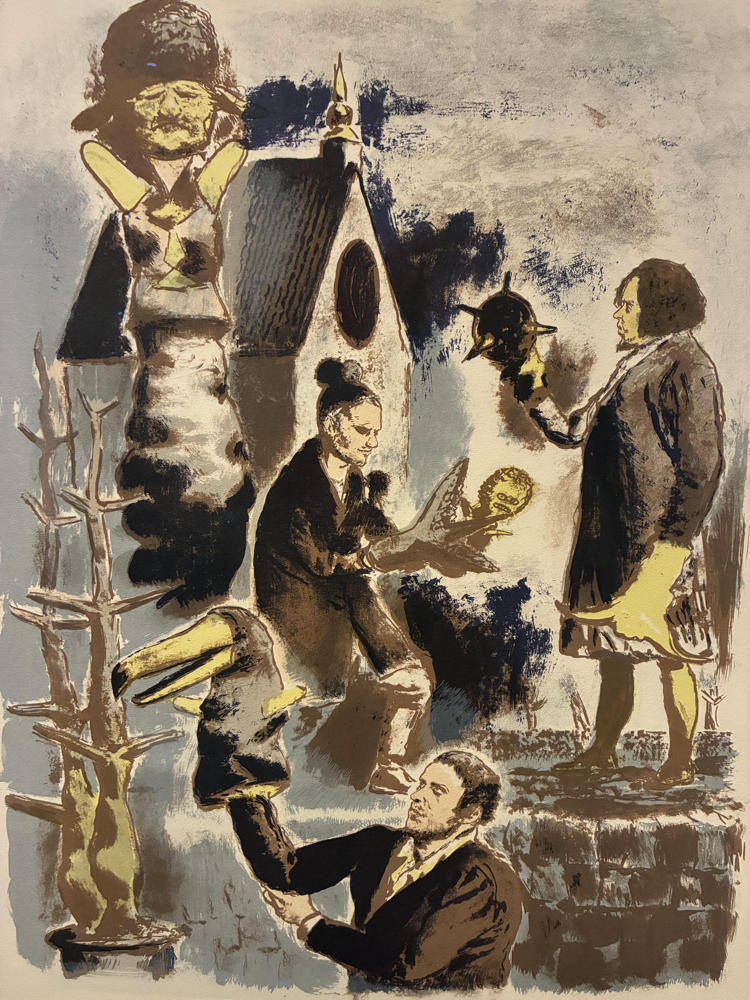
La direction du musée montre une sélection riche et variée d’œuvres graphiques colorées ainsi que cinq peintures à l’huile sur papier de grands formats couvrant la période 1988-2026, très étonnantes et singulières, aux motifs narratifs "déstructurés". La totalité du musée est dédiée à cette monographie, une première. (Restent visibles que Le cri d’Edward Munch et Pornokratès de Félicien Rops, collection du musée). C’est une première présentation d’une telle ampleur de son œuvre graphique en dehors de l’Allemagne, marquant ainsi un moment important sur la scène internationale de l'art contemporain européen et international. L’ensemble qui est présenté (une centaine d’œuvres) au musée témoigne de thèmes de la vie quotidienne mixé à des formes narratives parfois symboliques, par une certaine étrangeté dans une série de figuration exaltée. Les personnages évoluent dans un espace, un paysage sans repères précis. La particularité de ces œuvres graphiques est la couleur, qui établit une certaine originalité. Picasso fut le premier à réaliser des gravures en couleur. Regardons ce fameux grand tableau : "GuS" où six personnages semblent déconnectés de leur réalité et de celle des autres, chacun partant de son côté, on ne sait où ! Des animaux, un tank miniature, des objets volants, un abbé, un diable, un ouvrier, des motifs parfois que l’on peut trouver surréalistes … peuplent toutes ces images à la recherche d’un certain "équilibre", où la temporalité est sans cesse décalée comme par magie. Ses œuvres sont soulignées par l’historicisme inspiré du passé de la République démocratique allemande. Le réalisme de cette peinture énigmatique au multiples résonnances a des accents oniriques très suggestives. On se souvient, sans doute (juste pour évocation), les anachronismes où réalité et rêves s’entrechoquent dans les peintures de Dali. Dans les œuvres de Neo Rauch nous avons l’impression que les espaces et les paysages où évoluent les personnages de l’artiste se superposent et s’entremêlent parfois d’une manière évanescente. Les figures font leur chemin sans direction précise, à l’aventure. Chacun peut construire une histoire dans ses grandes compositions ou dans les gravures. Une exposition rare et de très grande qualité plastique. |
Le Musuem de Reede (opened in 2017), dedicated to graphic arts, presents—following the very dense exhibition of works by Jean Rustin—an exceptional exhibition, a major retrospective devoted to the graphic work of Neo Rauch (born in Leipzig in 1960), a German artist little known in Belgium as in France. We had seen his first exhibition at the Fondation Beyeler (Basel-Riehen) in 2006, where his large canvases were shown.
The museum's management presents a rich and varied selection of colorful graphic works, as well as five large-format oil paintings on paper covering the period 1988–2026, which are highly striking and singular, with "deconstructed" narrative motifs. The entire museum is dedicated to this monograph—a first. (Only Edvard Munch's The Scream and Félicien Rops's Pornokratès, from the museum's collection, remain on view.) This marks the first presentation of such scale of his graphic work outside Germany, making it an important moment on the international scene of contemporary European and international art. The body of work on display (around a hundred pieces) at the museum reflects themes of everyday life mixed with narrative forms that are sometimes symbolic, marked by a certain strangeness within a series of exalted figuration. The characters move through a space, a landscape without precise markers. The distinctive feature of these graphic works is color, which establishes a certain originality—Picasso was the first to produce color prints. Consider the famous large painting "GuS," where six figures seem disconnected from their own reality and from each other's, each heading off in their own direction, no one knows where! Animals, a miniature tank, flying objects, an abbot, a devil, a worker, motifs that can sometimes be considered surrealist... populate all these images in search of a certain "balance," where temporality is constantly shifted as if by magic. His works are underscored by a historicism inspired by the past of the German Democratic Republic. The realism of this enigmatic painting, with its multiple resonances, carries highly suggestive dreamlike overtones. One is no doubt reminded (just as a point of reference) of the anachronisms where reality and dreams collide in Dalí's paintings. In Neo Rauch's works, we get the impression that the spaces and landscapes in which the artist's figures move are superimposed and sometimes intermingled in an evanescent way. The figures make their way without a precise direction, adventuring forward. Anyone can construct their own story within his large compositions or in the prints. A rare exhibition of very high artistic quality.
Patrick Amine
Anvers, juillet 2026 |
|
Neo Rauch,Équilibre, Museum de Reede, Anvers, 20 juin au 19 octobre 2026
Note : Museum de Reede, Ernest Van Dijckkaai 7, 2000 Antwerpen, Belgique. T.+32 3 434 03 04. Du jeudi au lundi, 11h-17h. Ces œuvres proviennent de la Grafikstiftung /Fondation Neo Rauch à Aschersleben, la ville où l’artiste a grandi. Il est représenté par David Zwirner depuis sa première exposition à la galerie de New York en 2000. Son exposition personnelle Field Signs a été présentée chez David Zwirner à Hong Kong en 2023. En 2019, Neo Rauch : Propaganda a été exposée dans l’espace hongkongais de la galerie, marquant la première exposition personnelle de l’artiste en Chine, tandis que Neo Rauch : Rondo a été présentée à Londres en 2016. |